
To apply for European Solidarity Corps volunteering, first confirm that your country of legal residence is covered, create an EU Login, complete your profile on the official European Youth Portal, and apply to individual projects that accept applicants from your country. Registration is not a placement offer. Each host organisation selects participants for its own activities.
This practical guide is for young people considering community, environmental, cultural or social inclusion volunteering in Europe or a participating partner country. It covers eligibility, the application process, funding, a sample motivation statement and the checks worth making before accepting an offer. The information below reflects the European Youth Portal’s official guidance reviewed on 8 November 2026; it does not advertise a specific currently open vacancy.
European Solidarity Corps volunteering: key facts
| Question | Official general rule | What applicants should check |
|---|---|---|
| Age | Register from 17; begin volunteering from 18; normally no older than 30 at the activity start | Age at the project start, not just the application date |
| Residence | Legal residence in a country covered by the programme | Each listing may accept only a subset of eligible countries |
| Individual volunteering | 2 weeks to 12 months, generally 30–38 hours weekly | Project schedule and duties |
| Team volunteering | 2 weeks to 2 months, generally 30–38 hours weekly | Group arrangements and dates |
| Basic support | Travel, accommodation, food, insurance, pocket money and relevant support services | Exact reimbursement method, limits and written agreement |
| Application fee | No participation fee under Corps principles | Do not pay an intermediary claiming to guarantee selection |
These details come from the official volunteering activities page, participant rules and programme principles. Humanitarian Aid Volunteering is a separate action with different rules, including an upper age limit of 35.
Who can apply? Check residence before anything else
The first eligibility test is not whether you have a strong CV. It is whether you legally reside in a country the European Solidarity Corps covers. The official country list includes the 27 European Union Member States, associated countries such as Iceland, Liechtenstein, North Macedonia and Türkiye, and certain other participating countries including Albania, Armenia, Azerbaijan, Georgia, Jordan, Morocco, Serbia and Ukraine. This is not a complete reproduction of the list; always use the live official page.
Important for readers in Pakistan: Pakistan is not listed among eligible countries of legal residence on the official European Youth Portal as checked on 8 November 2026. A person legally resident in Pakistan should not assume that an ESC volunteering application is available to them. A Pakistani national legally resident in a listed country may be assessed based on that residence, subject to the programme and individual project’s rules. Citizenship, visa eligibility and legal residence are different questions.
Even if your residence country is covered, a particular opportunity can restrict its recruitment to selected countries. The European Youth Portal explicitly states that applicants can apply only to activities open to people from their country of residence. Check the “Looking for participants from” field on each listing, and be ready to provide proof of eligibility if selected. Do not pay an agent to bypass a residence restriction.
How to apply in seven practical steps
1. Open the official registration page
Start at youth.europa.eu/solidarity/register_en, not a forwarded form or social-media advertisement. The portal first checks your eligibility and asks you to accept the programme’s mission and principles. The official route is the safest way to avoid lookalike websites.
2. Set up EU Login securely
The registration page directs new applicants to create an EU Login account. Verify your email, choose a secure password and enable multi-factor authentication, which the official registration instructions describe as mandatory. Then return to the European Solidarity Corps portal and sign in. Keep access to that email address because project communications may arrive there.
3. Build a complete, honest participant profile
Describe your education, languages, interests, volunteer work, practical skills and availability. You do not need to invent impressive international experience. A student who helped organise a local book drive, for example, can explain how they coordinated collection days, communicated with volunteers and learned to manage unexpected changes. Be specific about what you actually did.
Think of the profile as a match-making document: it should help an organisation understand the tasks you can contribute to and the support you may need. If you are still developing your experience, RiseUp All’s leadership portfolio guide offers a useful method for documenting small projects honestly.
4. Search projects by role, location and recruitment country
Use the portal’s volunteering opportunities listings and your participant dashboard. Compare duties, duration, start dates, host details, working language and the countries from which applicants are accepted. A placement focused on supporting community gardens may be quite different from one assisting a youth centre, even when both mention sustainability or inclusion.
Shortlist two or three genuinely suitable roles rather than applying indiscriminately. For each, write down the official listing link, project code if shown, eligibility, application instructions and any deadline displayed on that particular page. Listings change; this article intentionally does not reproduce a vacancy deadline.
5. Tailor your motivation to the actual tasks
Organisations need to know why you want to contribute to their community and how you will approach the work. Link one or two real experiences to the advertised tasks. Avoid generic claims such as “I am passionate about changing the world” without a concrete example. A short, thoughtful response often communicates more than a long statement filled with slogans.
Illustrative motivation paragraph (fictional applicant): “I helped organise a monthly neighbourhood clean-up with fellow students and learned that clear task allocation makes volunteers feel welcome. Your project combines environmental work with community education, which matches my interests. I would like to contribute to practical activities, improve my communication skills and learn how your team involves local residents.” Adapt the structure, not the invented experience.
6. Submit through the project’s specified official route
Apply using the method stated in the live listing or your ESC dashboard. Some organisations may ask follow-up questions, a CV or an interview; these requirements are project-specific. Keep a copy of your answers and note when you applied. An organisation may also contact registered candidates whose profiles match its project, according to the European Youth Portal.
Do not treat an acknowledgement email as a confirmed placement. Registration and applying are separate from selection. If a third party requests a payment to “release” a guaranteed offer, check the programme’s no-fee principle and use our international opportunity verification checklist.
7. Review the written agreement before travelling
If selected, confirm the support and host organisations, exact duties, working hours, accommodation arrangements, food support, travel booking or reimbursement rules, insurance, pocket money, accessibility support and contact person. For cross-border individual volunteering, the official guidance describes a support organisation and a host organisation with different responsibilities.
The European Youth Portal’s participant support guidance says a participant agreement should set out rights and responsibilities, financial and insurance arrangements, tasks and intended learning outcomes. Check any visa or residence-permit requirements independently and allow sufficient processing time before committing to non-refundable travel.
Is European Solidarity Corps volunteering fully funded?
ESC volunteering is supported, but “fully funded” is not a substitute for reading your individual agreement. The official volunteering guidance identifies basic travel costs, accommodation, food, insurance, pocket money and certain additional support for specific needs. It does not mean that every personal purchase, travel upgrade, extra holiday, visa-related expense or unexpected cost is automatically reimbursed without conditions.
| Expense or support | General ESC guidance | Ask before accepting |
|---|---|---|
| Travel to and from the project | Basic travel support | Who books it? Is there a ceiling or reimbursement process? |
| Accommodation and food | Basic living support | Where will you live, and how are meals provided? |
| Pocket money | Allowance for personal expenses | Amount, payment frequency and local currency |
| Insurance and training | Programme support services | Coverage dates, exclusions and arrival arrangements |
| Visa, accessibility or other specific needs | Additional support may be available | Which documented costs qualify in your case? |
Unlike a salaried internship, a volunteering placement is primarily a community-service and learning activity, not a promise of employment. For a broader explanation of funding labels, read fully funded versus partially funded opportunities.
Four mistakes that waste applicants’ time
- Ignoring the residence filter. A project may be in an attractive country but still be closed to applicants from your country of residence.
- Applying without reading the duties. Full-time volunteering can involve 30–38 hours a week; it is not simply funded tourism.
- Confusing project funding with a personal selection. A project may exist and have funding while you remain unselected.
- Overlooking participation limits. For activities funded from 2024 onward, the official guidance generally limits combined volunteering participation to 12 months, with additional rules for long-term cross-border and humanitarian activities.
If you are looking for a remote rather than residential opportunity, compare this route with our UN online volunteering application guide. The two programmes have different organisers, eligibility rules, commitments and financial arrangements; neither should be presented as a substitute for the other.
A five-minute application checklist
- My legal residence is covered by the official programme rules.
- The specific project accepts applicants from my residence country.
- I meet the age and availability requirements at the start date.
- My profile and motivation statement reflect real experiences.
- I understand the duties, hours, support arrangements and application route.
- I will not pay a participation or guaranteed-selection fee.
- I will obtain written placement and travel details before booking.
Frequently asked questions
Can I register for the European Solidarity Corps at 17?
Yes, the official portal permits registration from age 17, but you cannot begin an ESC volunteering activity until you turn 18. Ordinary volunteering has an upper age limit of 30 at the start of the activity.
Can someone living in Pakistan apply?
Pakistan was not on the official list of eligible countries of legal residence when checked on 8 November 2026. A Pakistani passport holder legally resident in a covered country should verify eligibility based on that residence and the particular listing’s requirements. Do not assume citizenship and residence are interchangeable.
Do volunteers receive a salary?
ESC volunteering offers support for specified basic costs and pocket money, not an ordinary employment salary. Review the project’s written terms to understand the exact support package.
Is there a European Solidarity Corps application fee?
No participation fee is required under the official Corps principles. Treat any request for payment to secure a place as a warning sign and verify it through the European Youth Portal.
Will I receive a certificate?
The programme provides participation documentation and learning-recognition support, including Youthpass. The official guidance explains that a participation certificate is issued through the portal by an involved organisation after the activity and required participant feedback.
Are applications open all year?
There is no single universal volunteer deadline for every project. Individual listings have their own dates and selection conditions. Check the live opportunity page rather than relying on a blog’s old application deadline.
Where to start
The best first move is an eligibility check, not a rushed application. If your residence is covered, create your EU Login, complete your ESC profile and shortlist projects where your interests and availability match the work. Read the official listing and participant agreement carefully before making financial or travel commitments. For more pathways beyond ESC, explore RiseUp All’s practical guide to finding international opportunities.
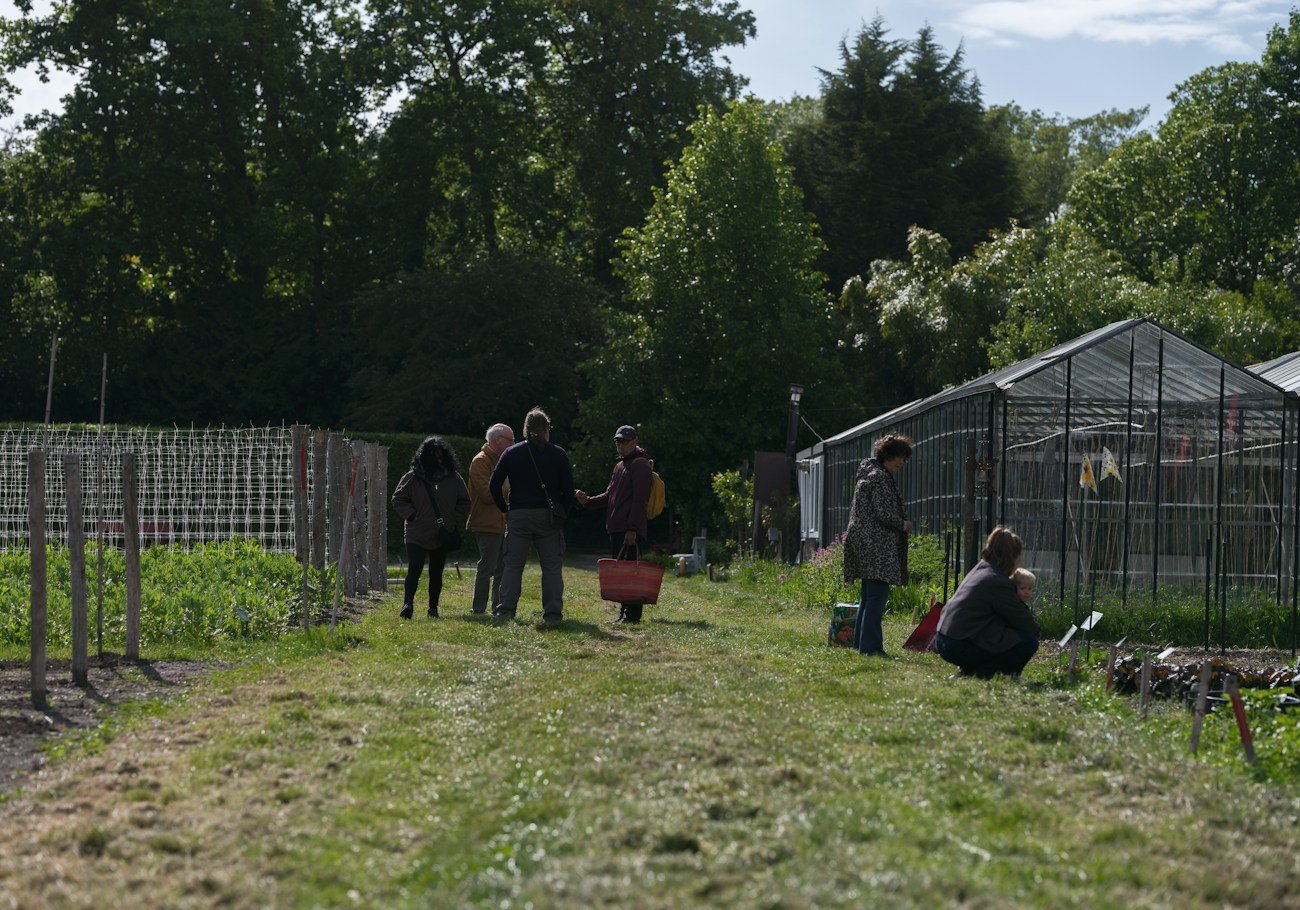
Primary-source note: This guide was researched against the European Commission’s European Youth Portal: volunteering activities, countries covered, registration, participation limits, training and support, mission and principles, and programme documents. Checked 8 November 2026. Featured photograph: Haberdoedas / Unsplash (illustrative community gardening, not a verified ESC project).